
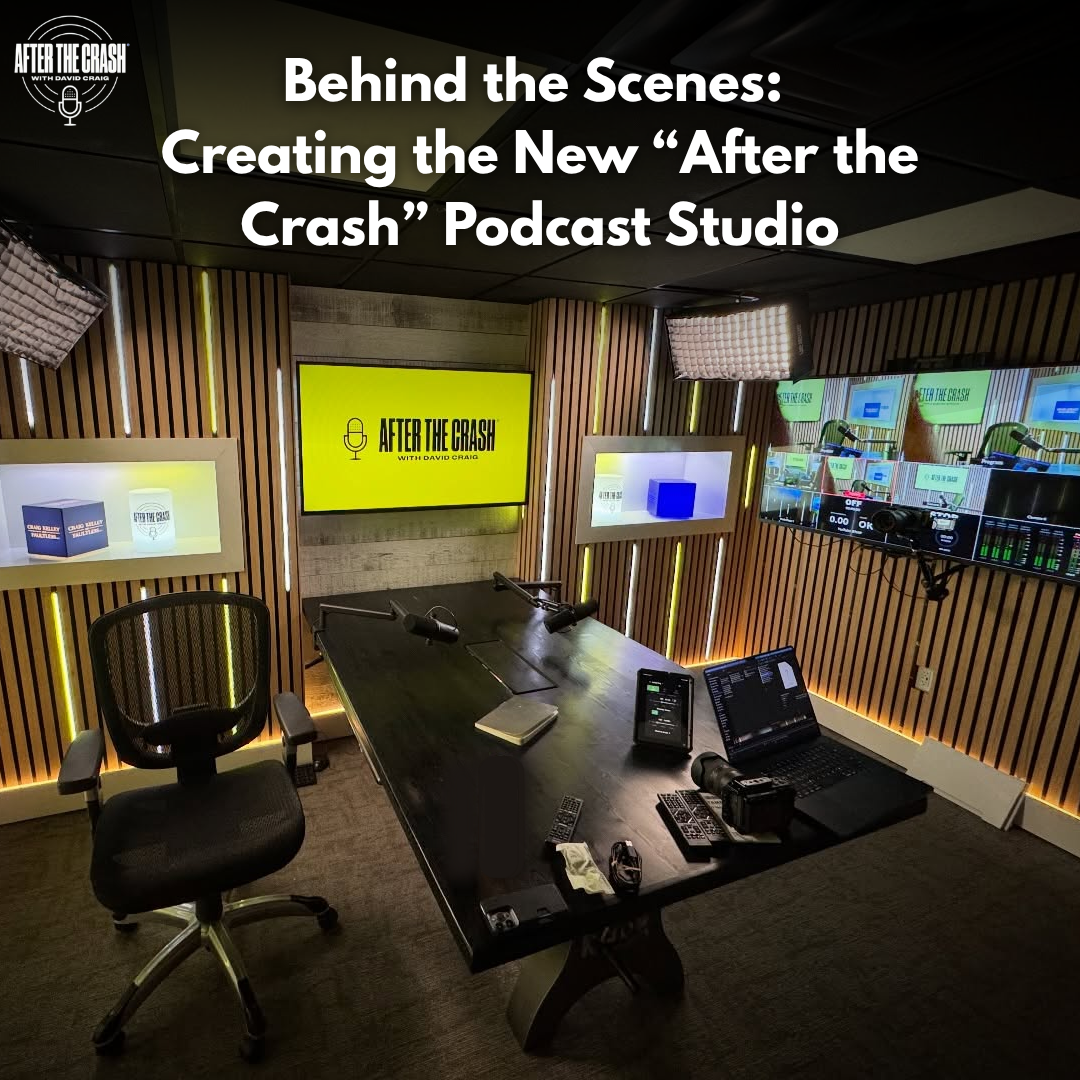
About six years ago in the fall of 2020, nationally recognized truck accident attorney David W. Craig launched his podcast, After the Crash. The monthly episodes are primarily aimed at the victims and families of victims of semi or other heavy truck wrecks, helping to educate and empower listeners in a digestible format. Each episode features a guest with an important perspective on truck accident law or the trucking industry. Since the podcast began, David’s goal has been to equip listeners with the knowledge needed to navigate this difficult period of their lives.
Now, several years after the podcast came to fruition, David decided it’s time for an upgrade. In the past, David recorded the podcast from his personal office using a web camera and a microphone. As the podcast has gained a larger following, David wanted to create a higher quality product for his viewers that reflects his expertise. Thus, the podcast studio project began in late 2025.
Before construction, David reached out to Crisp for guidance and advice on how to build a top notch studio. Michael Mogill, Crisp founder and CEO, hosts the highly successful podcast, The Game Changing Attorney. Craig, Kelley & Faultless is a CrispX member, so David spoke with Jessica Mogill and Michael McMullan for direction.
David’s initial vision simply consisted of a dedicated recording space and top of the line recording equipment. In collaboration with Aaron Sherman and Bobby Craig of Impact Video Productions, who work with David for both the podcast and the firm’s marketing, they created a loose design and equipment list. Then, they brought in Justin Rock, David’s nephew, to run the design while Aaron handled the technical equipment.
The process began with demolition and remodeling. David chose a room in the basement of Craig, Kelley & Faultless’s Lawrence office, which needed some slight adjustments to meet the vision the team had developed. Justin created an indent in the room’s outer wall to create a small desk with a window into the room on the outside, allowing Aaron to control audio and visual from the hallway while recording is in progress, which is fairly common in podcast set ups. He also custom built the desk that is used.
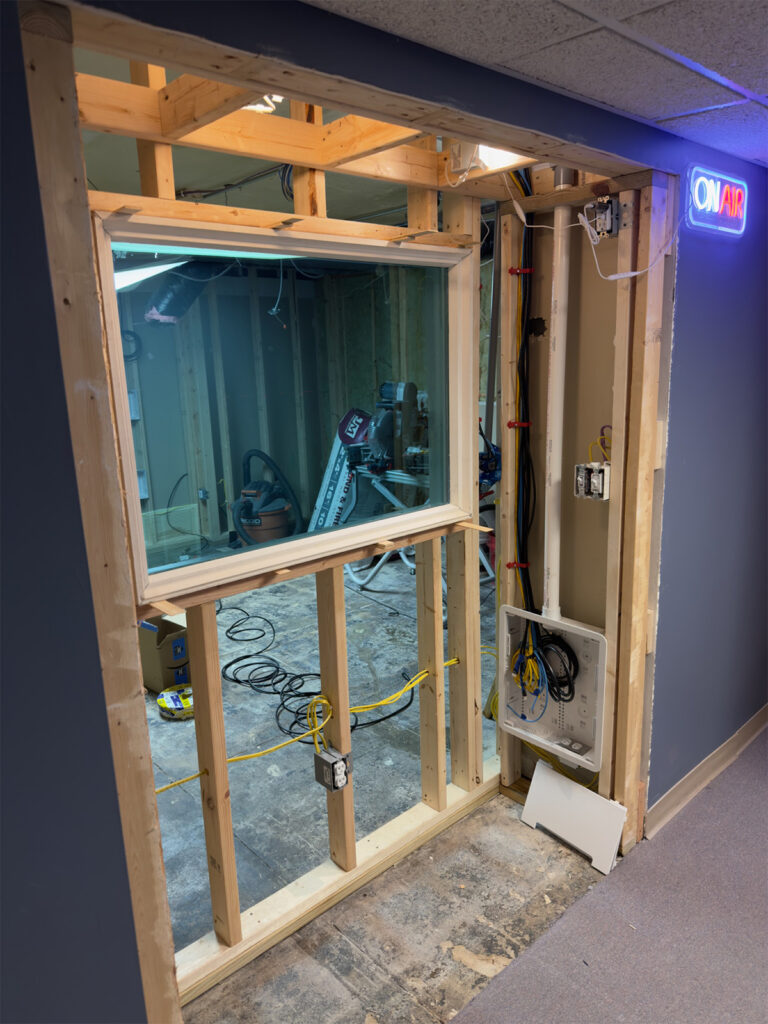
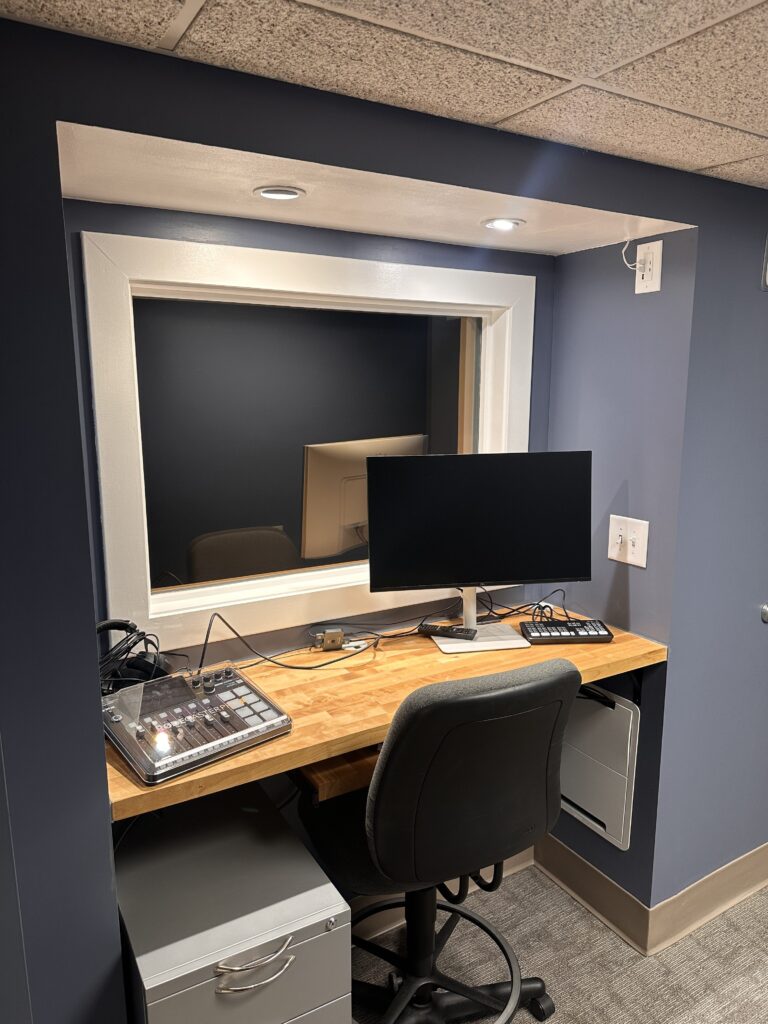
From there, Justin soundproofed the room and added several new electrical components. He rans dozens of feet of new cables and wiring from every side of the room, all connecting back to Aaron’s setup on the hallway desk. Included in the new electrical equipment were custom LED walls Justin created, which can all be controlled from a tablet. He also built indented shelving on the back walls of the room, allowing David to place props in the background and give the room an elevated feel while keeping things visually balanced.
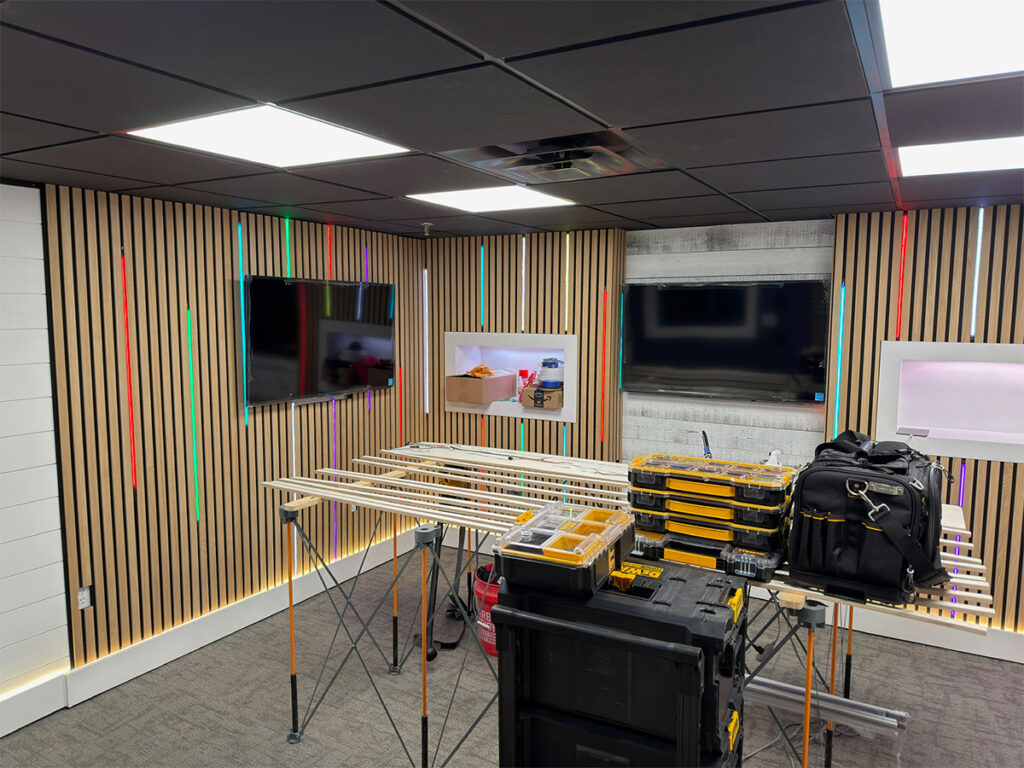
Aaron was in charge of acquiring the technical equipment needed to produce the podcast, including cameras and audio. He opted for a traditional podcast setup with three cameras: two pointing at the guest and host, and one wide shot that covers both. The third camera allows for seamless editing, even with cuts, to help maintain the integrity and flow of the original conversation. There is one last camera attached to one of the three TVs in the studio for Zoom interviews, since the majority of guests are featured remotely. The Zoom camera also works for the firm’s internal needs.
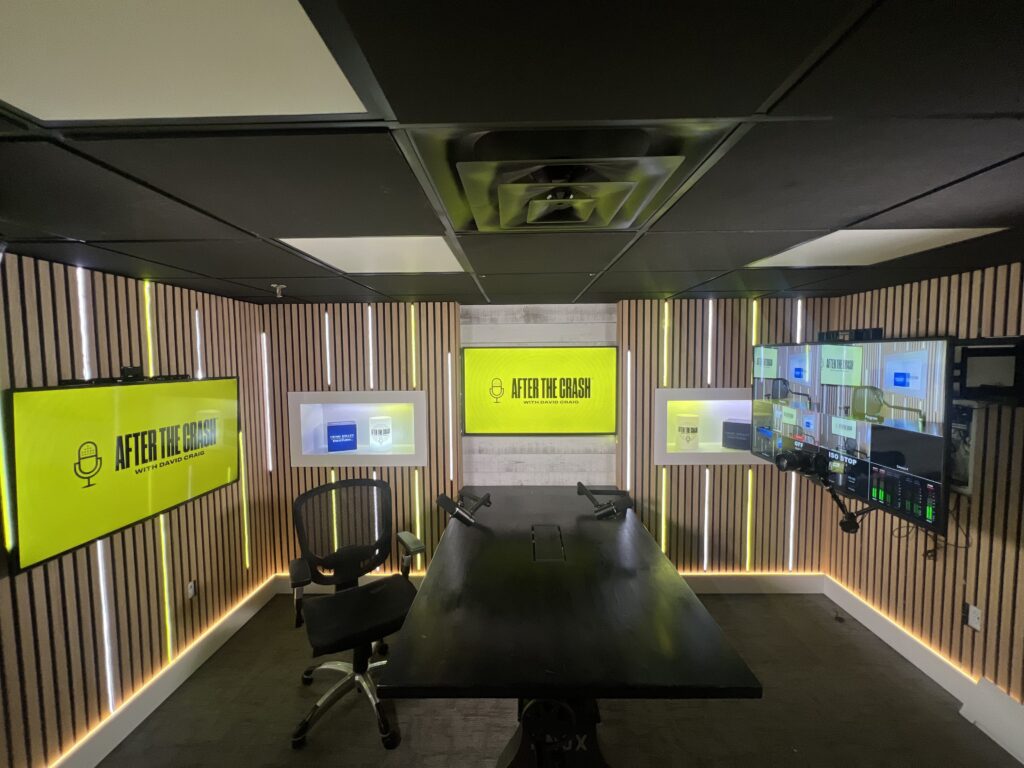
David’s previous set up in his personal office was limited to the quality of his web camera. With Aaron’s choice of Sony FX30 cinema cameras with Tamron lenses, the visual production value has drastically increased. They also invested in top-of-the-line Shure microphones and post-processing interfaces, including the Rodemaster Pro 2 soundboard and Blackmagic Design ATEM Mini Prop ISO for video switching. Beyond improving the overall look of the podcast’s production quality, this equipment upgrade increases the professional authority of the podcast by displaying David’s dedication and his investment into the project.
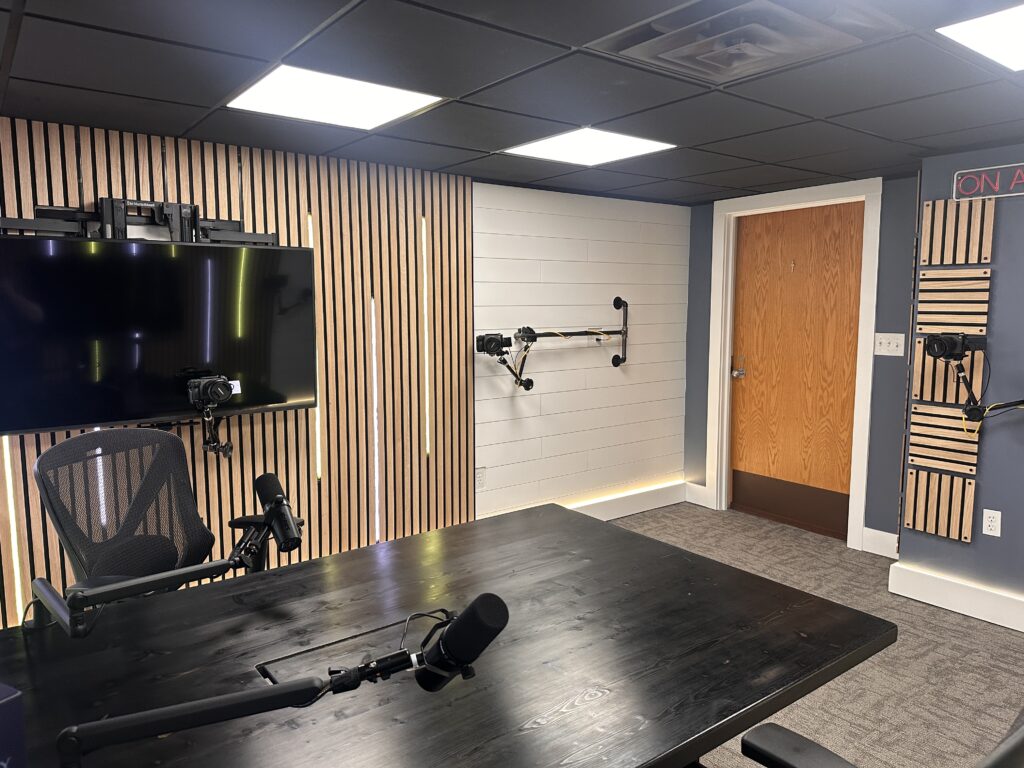
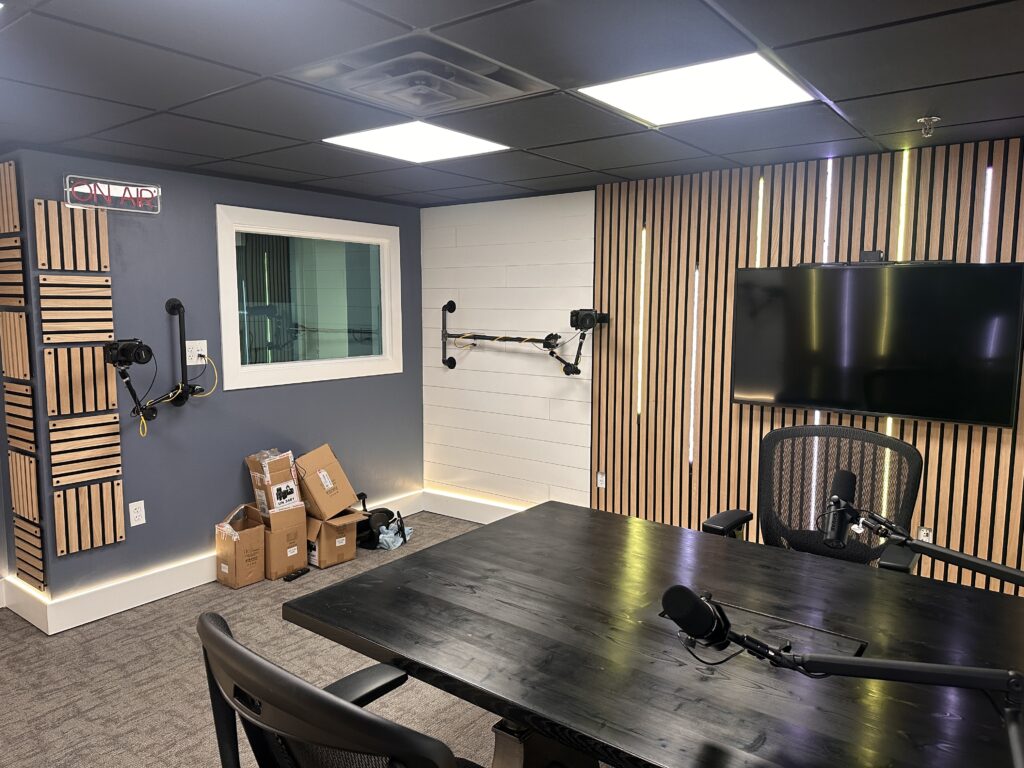
Overall, those involved in the creation of the podcast studio found it to be a challenging but exciting project. We were so fortunate to have Aaron and Justin’s expertise when building this studio, and we can’t wait to share the new setup with you on the next episode of After the Crash.
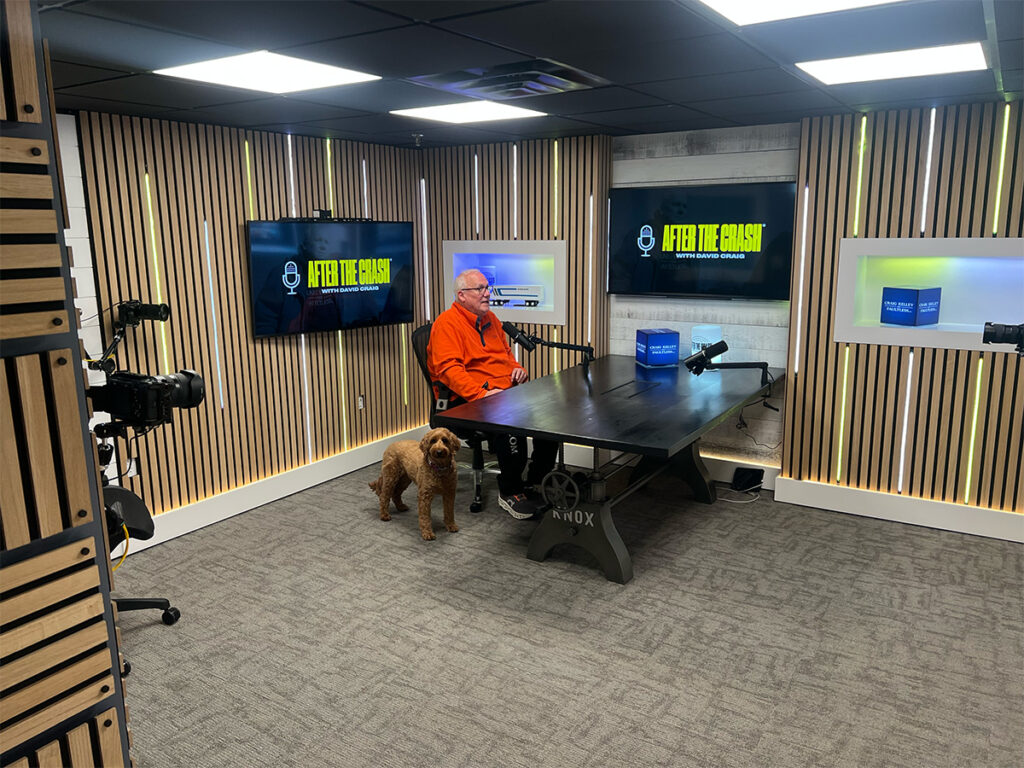
After the Crash Podcast: A Legal Resource for Truck Wreck Victims
After the Crash is currently ranked No. 6 in personal injury podcasts on FeedSpot. It is the highest-ranked podcast focusing on personal injury resulting from commercial vehicle and truck wrecks.
The podcast was launched over five years ago, in the fall of 2020, by attorney David W. Craig. It educates and empowers listeners in a digestible format. It is primarily aimed at the victims and the families of victims of semi or other large truck accidents.
It is David’s goal to equip listeners with the knowledge necessary to navigate this tough time in their lives. Anyone — truck wreck survivors, legal professionals, healthcare workers, and anyone in between — can tune into After the Crash for free.
A new episode is released monthly, featuring a guest with an important perspective. In each episode, David interviews individuals involved in commercial motor vehicle cases, or experts whose skills are crucial to understanding trucking cases.
Episodes are posted on YouTube, Spotify, Amazon and Apple Podcasts, and the Craig, Kelley & Faultless website.
Experienced Truck Accident Attorney
David W. Craig is a nationally recognized board-certified truck accident attorney. He is also the managing partner and one of the founders of Craig, Kelley & Faultless, a personal injury law firm headquartered in Indianapolis. Craig, Kelley & Faultless can be contacted at (888) 253-5198, and additional information can be found on the firm’s website or on Facebook and LinkedIn.
He is board-certified by the National Board of Trial Advocacy, accredited by the American Bar Association in Truck Accident Law. He sits on the Board of Regents of the Academy of Truck Accident Attorneys. He is recognized as a Top 10 Trucking Trial Lawyer by the National Trial Lawyers, as well as a Top 50 Indiana lawyer by Super Lawyers. David is the author of Semitruck Wreck, A Guide for Victims and Their Families and It’s Never Been Easier to Hire the Wrong Attorney, both written to help people navigate what comes next after a tragic wreck. He also hosts the podcast After the Crash, where you can gain valuable information about the dangers involving semis and large trucks that do not follow safety protocol regarding speed, weather conditions, maintenance upkeep, etc.